Wooden Cat Tower Stability Guide for Big, Active Cats
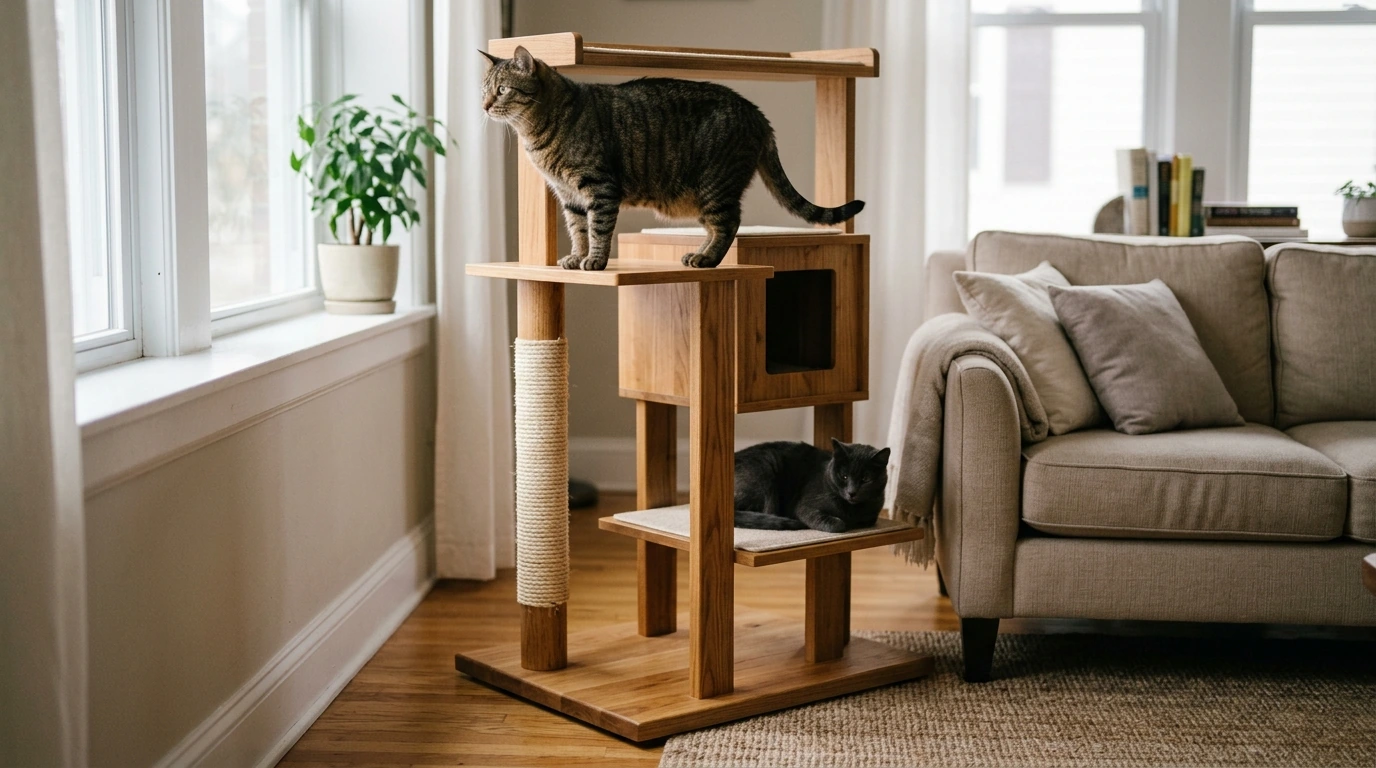
Wooden Cat Tower for Cats That Need Real Stability
A cat tower should earn its floor space: steady under a running jump, comfortable for long naps, and durable enough for daily scratching. Our wooden cat tower for cats is built for homes with bigger bodies, higher energy, or multiple cats—where “cute but flimsy” doesn’t last.
What a wooden cat tower does better in a busy home
When your cat actually uses a tower the way cats are meant to—launching, climbing, perching, stretching, and scratching—stability stops being a “nice to have” and becomes the whole point.
- Supports confident climbing and leaping with a structure that feels solid underfoot—especially important for larger cats and energetic jumpers.
- Brings a cleaner, furniture-style look compared with bulky carpeted posts, while still offering vertical territory cats naturally seek.
- Handles daily wear in high-traffic spots like living rooms and shared pet areas, where lighter towers tend to wobble over time.
- Creates separation in multi-cat households by adding levels, perches, and “personal zones” without taking over the whole room.
Vertical territory is also a practical enrichment tool. Guidance from feline welfare organizations consistently emphasizes that cats benefit from environments that support climbing, perching, and choice in where to rest and observe.
For deeper reading, you can review the
American Association of Feline Practitioners (AAFP) Feline Behavior Guidelines
and
International Cat Care’s advice on cats’ environmental needs.
Who this tower is made for
- Big cats that need wider, more confident footing and a tower that stays put when they launch upward.
- Households with two or more cats where vertical space reduces crowding at ground level.
- Cats that prefer to perch and watch—near a window, beside the family room, or adjacent to a favorite napping spot.
- Pet parents who want a long-term setup instead of replacing soft, unstable towers after a few months of heavy use.
If your cat has ever stepped onto a tower and immediately hopped back off because it shifted, you’ve seen how “a little wobble” can become “never again.” A sturdier wooden build helps remove that hesitation so the tower turns into a true daily hangout.
How to choose the right setup and placement
A solid tower can still go unused if it’s parked in the wrong spot. Placement is where you make the tower feel like part of your cat’s existing routine.
- Match the tower’s footprint to your cat’s habits: jumpers do best with a stable base near a launch point, while loungers appreciate a calm corner with a clear view.
- Place it where your cat already spends time (near a window, in the family room, or close to a favorite scratch zone) so the tower becomes part of daily routines.
- If scratching is the main goal, position the tower along common pathways—cats scratch to stretch and mark, so “on the route” works better than “out of the way.”
- For multi-cat homes, keep access open on more than one side when possible to prevent one cat from guarding the only entrance.
Quick fit check for a wooden cat tower
| Home situation | What to prioritize | Placement tip |
|---|---|---|
| Large cat (or heavy jumper) | Stable base and sturdy vertical structure | Near a wall or corner for a defined landing zone |
| Two+ cats sharing one tower | Multiple levels and clear routes up/down | Avoid tight corners where one cat can block access |
| Cat scratches furniture edges | Scratch-friendly zones where cats pass by | Place beside the most-targeted furniture area |
| Cat loves window watching | Comfortable perching spots | Set within view of the preferred window |
Day-to-day use: keeping it comfortable and inviting
Once the tower is in place, the goal is to make it the easiest “yes” in the room—more appealing than the sofa arm, more convenient than the bookshelf, and more comfortable than the laundry pile.
- Start with familiar scents: place a small blanket or bed your cat already uses on a lower level, then let them explore upward at their own pace.
- Reward curiosity: sprinkle treats on different levels for the first few days to encourage climbing and positive association.
- Keep nails and scratching needs in mind: consistent access to scratching areas helps redirect attention away from sofas and rugs.
- Maintain traction and hygiene: wipe surfaces routinely and keep nearby floors clear so cats can approach and jump safely.
Featured pick: Wooden Cat Tower for Big Cats
Before-you-buy checklist
| Checkpoint | Why it matters |
|---|---|
| Room placement | The right location increases daily use and reduces unwanted scratching elsewhere. |
| Multi-cat access | Open approach angles reduce guarding and stress. |
| Cat’s activity style | Jumpers need stability; loungers want a perch and calm surroundings. |
A practical add-on for organized pet zones
Our team often pairs stable cat furniture with simple home organization upgrades like the 6FT x 4FT Outdoor Metal Storage Shed – Durable Steel Utility Tool House with Secure Lock, Brown to keep pet supplies from spilling into high-traffic rooms.
FAQ
Is a wooden cat tower a good choice for large cats?
Yes—large cats often do better with a solid structure that feels secure when they climb, turn, and jump. A steadier tower supports confident movement and holds up better to daily use from heavier bodies.
Where should a cat tower be placed so cats actually use it?
Place it where your cat already likes to be, such as near a window view or in the family room, and keep the approach area open and easy. In multi-cat homes, avoid cramped corners that let one cat guard the only entrance.
How do you get a cat to start using a new tower?
Introduce it gently by adding familiar bedding on a low level and using treats or play to create positive first experiences. Let your cat explore at their own pace and keep the routine consistent for the first week.













Leave a comment