Budget Like a Boss Checklist: Weekly Reset to Save More

Budget Like a Boss: The Checklist That Turns “Someday” Savings Into a Weekly Habit
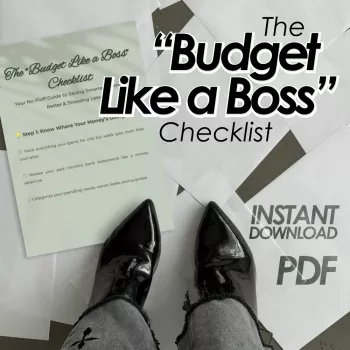
Money goals don’t fail because you don’t care—they fail because the steps feel fuzzy. When your plan lives in your head, it’s easy to forget a bill, overspend in one category, or tell yourself you’ll “start next month.” Our team made the The “Budget Like a Boss” Checklist | Digital Download to Learn How to Budget and Save Money | Easy Printable Budgeting Guide to give you a simple weekly reset: quick decisions, repeatable routines, and a clear path from paycheck to priorities.
Print it and keep it where decisions happen—your desk, planner, or fridge—or use it digitally on a tablet. Either way, you’re building a habit you can actually maintain.
What this checklist helps you do (without turning budgeting into a second job)
- Get clarity on where money is going before it disappears into “miscellaneous.”
- Build a budget that matches real spending patterns instead of wishful thinking.
- Create a savings rhythm that works with your pay schedule (weekly, biweekly, or monthly).
- Spot the sneaky leaks—subscriptions, impulse spending triggers, and forgotten annual bills.
- Make the next step obvious: pay essentials, plan variable spending, then automate savings.
If you want a solid foundation for the basics of budgeting and saving, the Consumer Financial Protection Bureau (CFPB) budgeting resources and FDIC Money Smart are both strong, practical references.
A simple weekly flow to budget and save money—using the checklist
The goal isn’t perfection. The goal is a short, repeatable routine you can stick with when life gets busy.
- Set a 20–30 minute “money meeting” time. Consistency matters more than duration.
- Start with what’s certain: paychecks, fixed bills, and minimum debt payments.
- Plan variable spending categories (groceries, gas, dining, kids, pets) with realistic caps.
- Choose one savings priority at a time (starter emergency fund, sinking funds, or debt payoff).
- End with a quick review: what changed since last week, what needs adjusting, what can be automated.
Weekly Budget Like a Boss Routine (printable-friendly)
| Step | What to check off | Typical time | Quick tip |
|---|---|---|---|
| 1 | Confirm income and pay dates | 3–5 min | Use take-home pay, not gross. |
| 2 | List upcoming bills due before next paycheck | 5 min | Include annual/quarterly bills as sinking funds. |
| 3 | Set caps for variable spending | 5–10 min | Start with last week’s actuals, then adjust. |
| 4 | Assign savings or debt goal for the week | 3–5 min | Automate transfers when possible. |
| 5 | Track quick wins and one fix for next week | 3–5 min | One change at a time sticks longer. |
The “boss moves” built into the checklist (small actions that add up fast)
- Make savings automatic: a small scheduled transfer beats a big plan that never happens.
- Use sinking funds: irregular expenses (car repairs, holidays, back-to-school, annual memberships) stop feeling like emergencies when you plan for them a little at a time.
- Give every dollar a job—plus a buffer: a tiny cushion helps your plan survive real life (and keeps you from raiding savings).
- Reduce spending friction: unsubscribe, delete shopping apps, and set a 24-hour pause rule for non-essentials.
- Keep a simple scorecard: bills covered, savings moved, overspends spotted, one improvement chosen for next week.
If your paycheck still feels “off” even when you’re budgeting carefully, it can help to verify withholding and expected take-home pay. The IRS Tax Withholding Estimator is a straightforward tool for that.
How to use it as an easy printable budgeting guide (or keep it digital)
- Print + binder: keep a master copy, then print a fresh page weekly or monthly so you can compare patterns over time.
- Print + clipboard: great for a quick weekly reset at the kitchen counter.
- Digital: open the file on a tablet in a note-taking app, duplicate it each cycle, and set recurring reminders.
- Pair it with a calendar: mark bill due dates and “true expenses” like renewals, registrations, and seasonal spending.
- Optional: add an envelope-style approach for one trouble category (like dining out or online shopping) while keeping everything else simple.
Common budgeting roadblocks (and what to check off next)
What’s included and who it’s best for
If one of your big “true expenses” is car ownership, our team also recommends pairing your budget routine with Smart Insurance for New Car Owners: A Guide to Understanding Insurance Basics & Choosing the Right Policy so you can plan premiums, deductibles, and renewal timing with fewer surprises.
FAQ
How do you start budgeting when you’re living paycheck to paycheck?
Focus on the next pay period only: list income dates, cover essentials first, set realistic caps for variable spending, and move even a small amount to savings. A small buffer category and sinking funds reduce the number of “surprise” expenses that knock you off track.
Is this checklist better for weekly or monthly budgeting?
It works for both, but weekly check-ins help most people stay aware and adjust faster, while monthly budgeting can be great for fixed bills. Align your routine to your pay schedule so your plan matches when money actually hits your account.
What do I need to print and use the checklist?
A basic printer and standard paper are enough, and a binder or clipboard can make it easier to reuse. If you prefer digital, you can use it on a tablet or computer and duplicate it each week or month.














Leave a comment