Laundry Room Workflow: Zones, Surfaces, Storage That Work
Designing a Laundry Space That Actually Works (Without Making It Bigger)
A laundry space earns its keep when it supports the real rhythm of laundry: sorting, pre-treating, washing, drying, folding, hanging, and putting away—without bottlenecks. The difference between a room that “looks finished” and one that actually works is usually a handful of decisions: where you land baskets, how you control lint, whether there’s a true folding surface, and how you store supplies so they don’t migrate across the house. Our team uses the steps below to help you rebuild the space around the way laundry really happens—whether your setup is a full room, a closet, or a hallway nook. For more guidance, see Laundry – UMN housing – University of Minnesota.
Start with the laundry workflow (then design around it)
Before you buy bins or add shelves, map what happens in a typical week. Write your steps in order: collect, sort, treat stains, wash, dry, fold/hang, return items, handle delicates, and deal with the “clean but waiting” pile. That list is your blueprint. For further reading, see Laundry – Campus Life.
- Find your top three friction points. If you’re folding on top of machines, stepping over baskets, or hunting for hangers, your layout is forcing extra decisions and extra steps.
- Adopt a “zero-drop” rule. Every item should have a place to land immediately—basket parking, a counter, a hanging bar, or a hamper. If something doesn’t have a landing spot, it becomes a pile.
- Design for two loads at once (when that’s your reality). If you routinely run back-to-back cycles, plan your clean zone so one load can be folded while the next is drying.
- Don’t forget maintenance. Lint disposal, wiping detergent drips, storing a handheld vacuum, and airing out damp items all need a “home,” too.
If you want a structured way to translate these steps into a layout, our internal planning tool, Designing a Laundry Space That Actually Works: 3-in-1 Digital Download Bundle, walks you through workflow, zones, and storage choices in one coordinated plan.
Build three zones: Dirty, Clean, and Supply
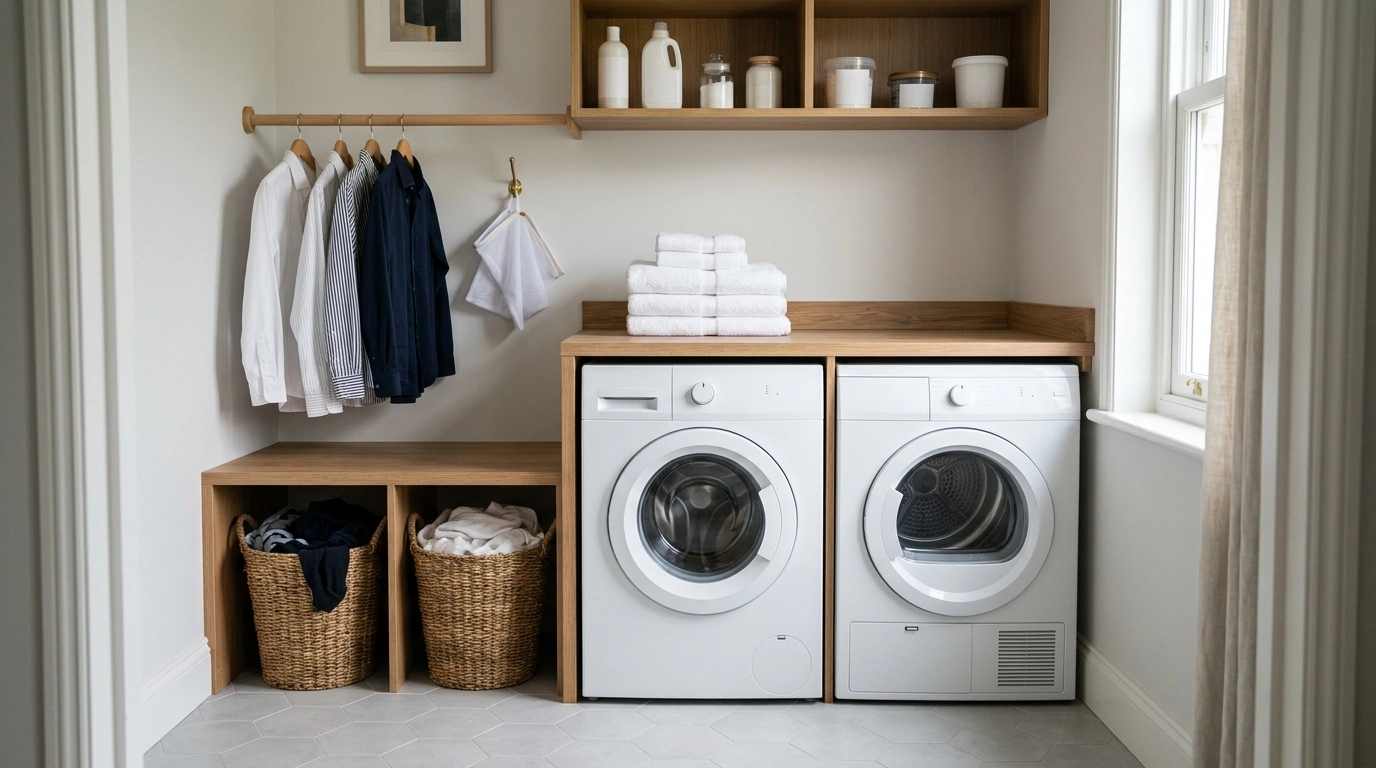
The simplest way to stop laundry from spreading is to give each stage a clear zone. Even in a closet, you can create “micro-zones” with a shelf, a hook, and a narrow fold-down surface.
| Zone | Must-have elements | Nice-to-have upgrades | Common space-wasters to avoid |
|---|---|---|---|
| Dirty | Hamper/basket parking; sorting method; stain-prep spot | Pull-out sorter; drip tray; labeled bins | Single tiny hamper; no landing space; supplies scattered |
| Clean | Folding surface; hanging option; basket for “to-put-away” | Wall-mounted drying rack; garment steamer hook | Folding on machines; nowhere for hangers; piles on the floor |
| Supply | Detergent storage; tool caddy; lint disposal | Slim rolling cart; door-mounted organizer | Open shelves overloaded; heavy jugs stored too high |
How to separate Dirty and Clean (even when you don’t have room)
Use “direction” instead of distance. Keep dirty baskets and stain tools to one side, and reserve one surface (even a narrow shelf) as clean-only. When you can’t create separation with walls, do it with habits: dirty items never touch the folding surface, and clean clothes never go back into the sorter.
Layout moves that save steps in tight spaces
If you’re considering an appliance upgrade as part of your reset, ENERGY STAR’s washer guidance can help you compare efficiency and features without getting lost in specs. See: ENERGY STAR — Clothes Washers.
Storage that stays neat: right-size, label, and contain
When you’re storing cleaning chemicals, prioritize safe placement and clear labeling. The CDC’s general principles for safe product use are a helpful baseline for any home cleaning zone: CDC — Cleaning and Disinfecting Your Facility.
Finishing touches that make the room feel effortless
Put it into action with a simple plan (and store overflow where it belongs)
If you want a start-to-finish roadmap, we built Designing a Laundry Space That Actually Works: 3-in-1 Digital Download Bundle to help you map zones, list must-haves, and choose storage that fits the space you have. It’s especially useful when every inch needs a job and you don’t want to redo the room twice.
And if your main issue is bulk overflow (extra detergent, paper goods, seasonal gear) competing with laundry essentials, moving backstock out of the laundry zone can instantly improve flow. For homes that need secure outdoor overflow storage, our team also offers the 6FT x 4FT Outdoor Metal Storage Shed – Durable Steel Utility Tool House with Secure Lock, Brown, which can help keep the laundry area reserved for weekly-use items rather than long-term stash.
FAQ
What are the three most important features in a functional laundry space?
You’ll get the biggest payoff from a dedicated folding surface, a clear dirty-to-clean workflow with reliable basket parking, and contained storage (a daily caddy, a separate backstock spot, and a lint/trash solution near the dryer).
How can a laundry closet feel organized without adding cabinets?
Use vertical rails and hooks, add a slim shelf for a handled caddy, consider a door-mounted organizer for small tools, and install a fold-down table to create a real clean zone. Keep the floor clear by assigning strict basket parking.
Where should detergents and heavy supplies be stored for safety and convenience?
Store heavy items at waist height or lower, ideally in a handled caddy or tray so you can carry and pour with fewer spills. Keep daily-use products separate from backups and place anything hazardous out of reach when needed.















Leave a comment