Beginner Acrylic Painting: Easy Steps, Tools & Fixes
Introduction
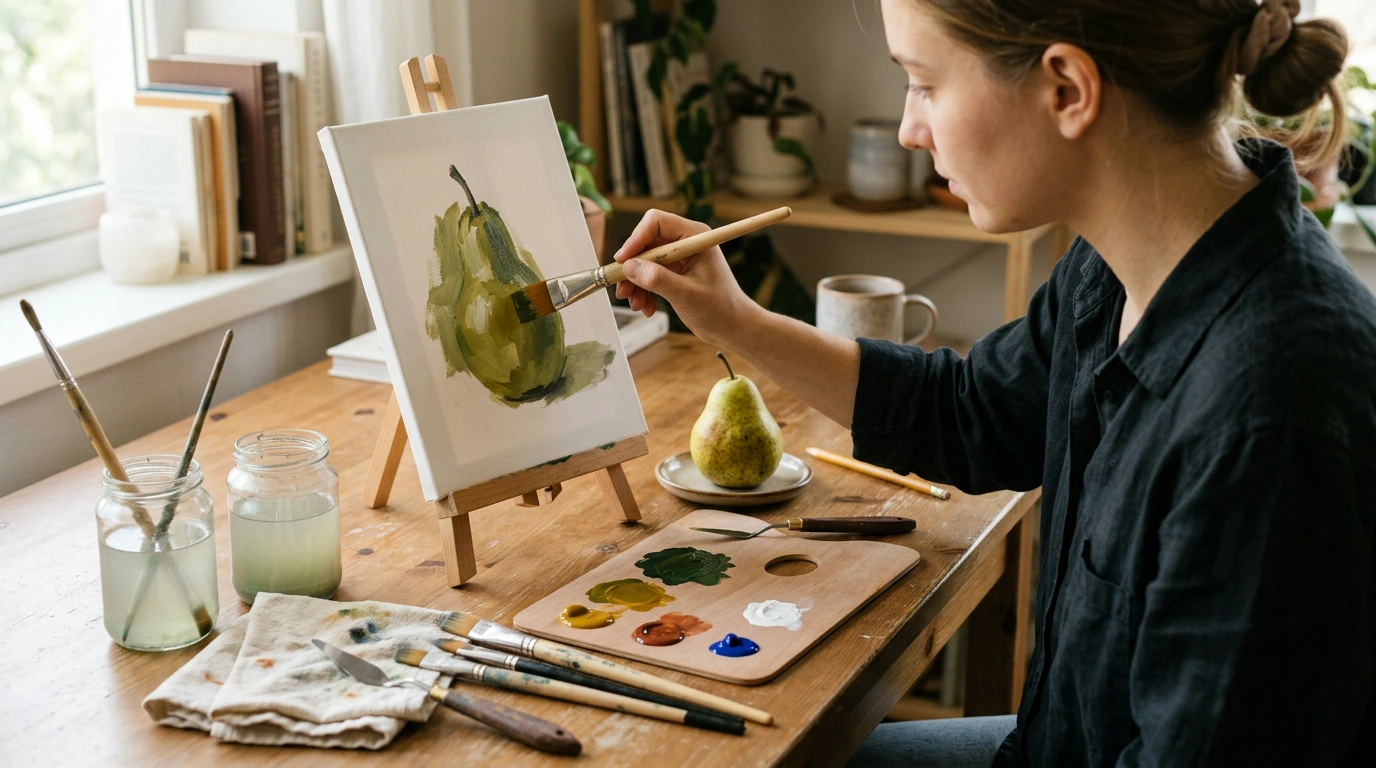
Acrylics are one of the easiest ways to start painting: they dry fast, they’re forgiving, and they can look bold and graphic or soft and painterly depending on how you handle them. The biggest hurdle for most beginners isn’t “talent”—it’s having a simple setup and a repeatable routine so you can actually finish pieces. Our team put together the step-by-step path below to help you go from first brushstroke to a clean, satisfying finished painting without drowning in options.
Start with a small setup that actually gets used
If you keep your early setup tight, you’ll learn faster because you’ll spend your time painting instead of troubleshooting.
- Choose a limited palette (4–6 colors). Fewer colors makes mixing easier and keeps your results cohesive.
- Pick one surface type for the first few paintings. Canvas panels, acrylic paper, or stretched canvas all behave a little differently—reduce variables while you learn.
- Keep two water containers. One is for rinsing, the other stays clean for thinning paint or softening edges.
- Use a simple brush set. One flat, one filbert, one round, and one small detail brush will cover most beginner exercises.
- Add a basic acrylic medium when you’re ready. Medium thins paint without weakening the binder the way too much water can.
Beginner Acrylic Starter Checklist (Quick Buy List)
| Item | Beginner pick | Why it helps |
|---|---|---|
| Paint colors | Titanium white, black, primary blue, primary red, primary yellow (plus one earth tone optional) | Covers mixing basics without overwhelm |
| Brushes | 1 flat (1/2″), 1 filbert (size 6–8), 1 round (size 4–6), 1 liner/detail | Handles blocks, blending, lines, and small accents |
| Surface | Acrylic paper pad or canvas panels | Budget-friendly and less precious than stretched canvas |
| Palette | Plastic or disposable palette sheets | Easy cleanup; encourages frequent color mixing |
| Extras | Rag/paper towel, painter’s tape, spray bottle | Controls edges, moisture, and quick fixes |
A simple step-by-step painting routine (repeatable for any subject)
This is the routine we recommend repeating until it feels automatic. The goal is to make decisions in the same order every time so you don’t get stuck halfway through.
- Pick one clear reference or idea. Start with a single object, a simple landscape, or basic shapes; save complexity for later.
- Tone the surface. Brush on a thin mid-value wash (a little paint + water/medium) so you aren’t judging everything against bright white.
- Sketch big shapes. Lightly place the main shapes; no details until the layout feels right.
- Block in darks and mids first. Use a larger brush than you think you need and keep highlights clean for later.
- Establish a light source. Decide where the light hits and keep it consistent; this alone makes beginner work feel more “real.”
- Refine edges and transitions. Soften edges where forms turn away; keep sharper edges near your focal point.
- Add accents and highlights last. Small high-contrast touches (bright lights, crisp lines) create that “finished” feeling fast.
- Final balance check. Step back and adjust values first (too light/too dark), then temperature (too warm/too cool), then details.
Beginner acrylic techniques worth practicing first
- Flat wash (smooth color): Load the brush consistently, paint in one direction, then lightly level strokes before it sets.
- Dry brush (texture): Use minimal paint on a dry brush over a dry layer to create grass, wood grain, or weathered texture.
- Layering (the acrylic superpower): Paint thin to thick and let layers dry so you can correct shapes without muddying color.
- Simple blending: Blend two adjacent wet areas with a clean, slightly damp brush; keep the blend zone small to avoid overworking.
- Glazing: Thin paint with medium for transparent color shifts—great for warming shadows or cooling distant areas.
- Scumbling: Drag an opaque, broken layer over a dry underlayer for haze, clouds, and soft highlights.
If you want deeper, brand-specific guidance on acrylic handling and mediums, we recommend browsing Golden Artist Colors, Liquitex, and Winsor & Newton for technical notes and product usage basics.
Avoid the most common beginner problems (and fix them fast)
Three easy practice projects (small, finishable, confidence-building)
Keep progress steady with a repeatable checklist
If you want a guided routine you can follow session-by-session, our team created Acrylic Painting Tips for Beginners – Easy Acrylic Painting Guide, Step-by-Step Beginner Acrylic Techniques, Digital Art eBook & Checklist to use like a simple plan: open it, follow the steps, paint.
And if your biggest blocker is keeping supplies out and ready (without taking over your living space), a dedicated storage spot can help you paint more often. For larger setups, 6FT x 4FT Outdoor Metal Storage Shed – Durable Steel Utility Tool House with Secure Lock, Brown can be a practical way to separate messy gear, backstock canvases, and drying pieces from high-traffic areas.
FAQ
What are the easiest acrylic painting techniques for absolute beginners?
Start with blocking in big shapes, layering thin-to-thicker, and doing simple value studies so you can see light and dark clearly. Dry brushing is an easy way to add texture fast, and basic blending works best when you keep the blend area small and avoid overworking.
How do beginners keep acrylic paint from drying too fast?
Work in smaller sections, mist your palette lightly with a spray bottle, and consider a stay-wet palette if you paint longer sessions. You can also use a small amount of acrylic retarder or medium to extend open time without making the paint watery.
Do acrylic beginners need medium, or is water enough?
Water is fine for small thinning, but using too much can weaken the paint and make it handle poorly. Medium keeps the binder strong while improving flow and making glazing easier and more predictable.












Leave a comment