Story-First Photo Composition: Frame Stronger Images Fast
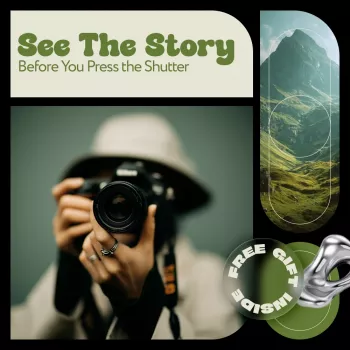
See the Story Before You Press the Shutter: A Simple Composition Routine for Stronger Photos
Powerful photos rarely come from luck—they come from noticing the story first, then building a frame that supports it. Our team put this routine together for everyday shooting (phone or camera), when you don’t have time to overthink settings but still want images that feel intentional. If you can learn to spot what matters, remove what doesn’t, and guide the viewer’s eye on purpose, your “keepers” rate goes up fast. For more guidance, see Tips for Taking Great Photos | Brand and Style Guidelines.
Start with the story, not the settings
Before you touch exposure, ask what the photo is about. Your story is the decision-maker that tells you what to include, what to exclude, and where the viewer should look first. For further reading, see Intro/Refresher on Composition – Photojournalism.
- Pick one clear subject. It can be a person, a gesture, a texture, a shadow, or a color—anything that carries meaning.
- Name the feeling in one word. Calm, tension, joy, loneliness—this becomes your mental filter for what stays in frame.
- Separate subject vs. setting. The setting should support the subject, not compete with it.
- Ask one quick question: “What do I want the viewer to notice first?”
| Question | What to do in the frame |
|---|---|
| What’s the subject? | Move your feet until the subject is clearly separated from distractions. |
| What’s the mood? | Choose light and background that match (soft for calm, hard contrast for drama). |
| What’s the main shape? | Look for a clean outline—avoid background lines cutting through the subject. |
| What can be removed? | Trim edges, simplify the background, wait for clutter to pass. |
| Where should the eye travel? | Use leading lines, framing, or layers to guide attention. |
Build the frame: four moves that fix most compositions
When a photo feels “almost good,” it’s usually not a settings problem—it’s a position problem. These four moves are the fastest way to turn a snapshot into a photograph with a clear point.
- Change your distance before changing your lens. Take two steps closer, then two steps farther. Compare which version tells the story with fewer distractions and a clearer subject.
- Change your height. Knee-level can add power and presence, eye-level reads as straightforward and honest, and a higher angle reveals patterns or context.
- Clean the edges. Scan the borders for bright hot spots, chopped limbs, stray signs, and high-contrast clutter that pulls attention away from your subject.
- Wait for the moment. A glance, a hand position, a step into light—timing often matters more than gear.
Composition tools that strengthen the story (without feeling formulaic)
Composition “rules” work best as prompts. Use them to test options quickly, then choose what supports your subject and mood.
- Rule of thirds: Place the subject where the viewer naturally pauses. Use it as a starting point, not a cage. For a quick refresher, see Britannica’s overview of the rule of thirds.
- Leading lines: Roads, fences, shadows, and architecture can aim attention straight to what matters.
- Framing within the frame: Doorways, windows, branches, and arches add depth and make the subject feel discovered.
- Foreground–midground–background: Layering adds place and scale—especially helpful in travel and street scenes.
- Negative space: Extra room around the subject can communicate quiet, isolation, or simplicity.
- Repetition and patterns: Turn ordinary scenes graphic; break the pattern to create a focal point.
| If the story feels like… | Try this composition choice |
|---|---|
| Calm, minimal, reflective | Negative space + a clean background |
| Energy, movement, rush | Leading lines + a strong diagonal |
| Intimacy, closeness | Tighter crop + simple framing (doorway/window) |
| A place with atmosphere | Three layers (foreground–midground–background) |
| A surprising detail | Fill the frame + remove distractions at the edges |
If you want a broader look at how artists and photographers think about arranging visual elements, Britannica’s guide to composition concepts is a solid reference. For practical photo-specific tips, Adobe’s composition tips is also useful.
Practice scenes that train the eye (no travel required)
A compact guide that keeps this process simple
If you want a repeatable structure you can actually use in the moment, our team built a field-friendly checklist style resource: See the Story Before You Press the Shutter – Photography Composition Tips Guide for Learning to See, Frame, and Create Powerful Images. It’s designed to help you spot the story quickly, frame with intention, and come home with stronger keepers from ordinary days.
Helpful extras our customers often pair with learning projects
- Smart Insurance for New Car Owners: A Guide to Understanding Insurance Basics & Choosing the Right Policy (useful if your photo practice includes more driving and day trips).
- 6FT x 4FT Outdoor Metal Storage Shed – Durable Steel Utility Tool House with Secure Lock, Brown (a practical way to keep gear and household items organized so your camera is easier to grab and go).
- Exaggerated Leaf Stud Earrings – Trendy Geometric Design (a simple subject for portraits and detail shots—great for practicing window light and clean backgrounds).
FAQ
Does composition matter if shooting with a phone?
Yes—composition is independent of camera type. Focus on making the subject clear, keeping the edges clean, using light direction on purpose, and moving your position until the frame supports the story.
How can photos look more “story-driven” without staging?
Look for relationships between a subject and its environment, plus small human moments like gestures and glances. Simplify the frame and rely on timing rather than forcing a pose.
What’s one habit that improves composition the fastest?
Do a quick edge scan before you press the shutter. Removing bright distractions, awkward cut-offs, and background lines intersecting your subject makes a bigger difference than most settings changes.














Leave a comment