4-Week Puppy Training Routine (Printable Starter Guide)
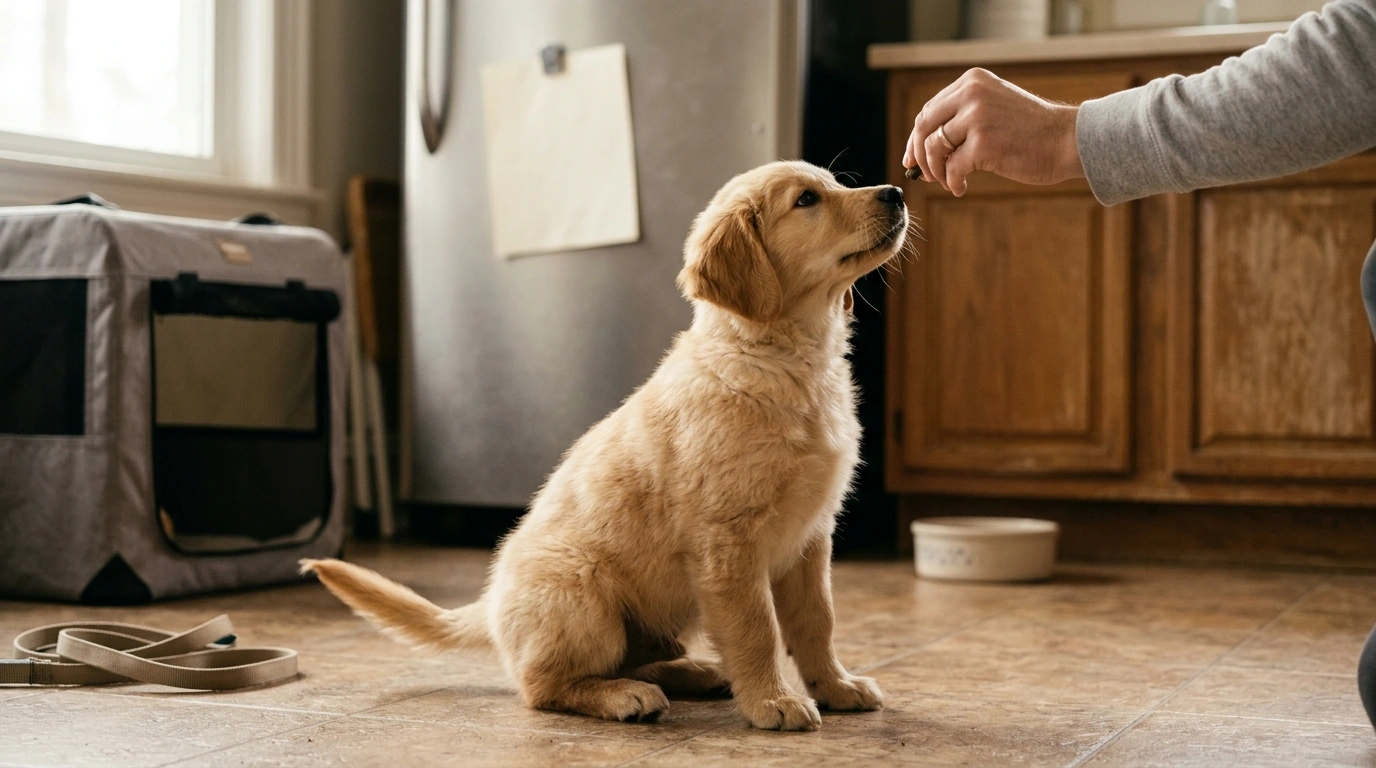
New Puppy Training Starter Guide: A 4-Week Printable Routine for Confident, Calm Puppies
A new puppy learns fastest when daily life is predictable, rewards are clear, and practice happens in short, upbeat sessions. This starter guide breaks training into a simple 4-week routine you can print, post on the fridge, and follow day by day—covering house-training, crate habits, core cues, and safe socialization without overwhelm.
What to Set Up Before Training Starts
Before asking your puppy to “behave,” set up the environment so success is the default. Management isn’t cheating—it prevents accidents and keeps bad habits from becoming practice.
- Create a small “puppy zone” (crate or pen) to prevent accidents and chewing while building calm alone-time.
- Pick high-value rewards (tiny soft treats) and a marker word (“Yes”) or clicker for instant feedback.
- Choose a consistent potty spot outdoors and a simple schedule tied to waking, eating, playing, and training.
- Puppy-proof high-risk areas: cords, plants, shoes, trash access, and reachable counters.
- Decide on household rules now (furniture access, feeding locations, where the puppy sleeps) so everyone stays consistent.
Starter Kit Checklist (Printable)
| Item | Purpose | Quick Tip |
|---|---|---|
| Crate or playpen | Safe rest and management | Feed meals inside to build positive association |
| Treat pouch + pea-size treats | Fast rewards for learning | Use many tiny treats to avoid overfeeding |
| Enzymatic cleaner | Removes accident odor | Avoid ammonia-based cleaners that mimic urine scent |
| Chew and food puzzle toys | Prevents boredom chewing | Rotate toys daily to keep novelty high |
| Leash + flat collar/harness | Loose-leash practice | Start indoors before adding distractions |
How Puppies Learn: Reward Timing, Repetition, and Rest
Puppy training is mostly about three things: clear feedback, lots of easy wins, and enough sleep to keep their brain online.
- Mark the exact moment the puppy does the right thing (then deliver the treat) to speed learning.
- Keep sessions short: 1–3 minutes, several times per day, especially for young puppies.
- Train in easy environments first, then add distractions gradually (distance is a “volume knob” for difficulty).
- Prioritize sleep: overtired puppies bite and struggle to focus; schedule naps in the crate/pen.
- Aim for progress, not perfection—successful repetitions matter more than long sessions.
For social exposure guidance that balances behavior and health considerations, the American Veterinary Society of Animal Behavior (AVSAB) puppy socialization statement is a helpful reference.
The 4-Week Routine (Printable Weekly Focus)
Think of each week as a “theme.” You’ll still potty, nap, play, and train every day—but your main focus shifts so you don’t try to do everything at once.
- Week 1: Settle in—potty schedule, crate comfort, name recognition, gentle handling, and calmness routines.
- Week 2: Foundations—sit, down, come (indoors), leash practice in low distraction spaces, and bite inhibition basics.
- Week 3: Real life—impulse control games (wait, leave it), polite greetings, and expanding social exposure safely.
- Week 4: Reliability—longer duration stays, stronger recall with distance, and proofing cues across rooms and outdoors.
- Track wins daily: accidents, successful potty trips, crate nap durations, and one “new” exposure per day.
If you want the routine already laid out with tracking pages and lesson steps, the New Puppy Training Starter Guide (printable 4-week routine) is designed for quick reference during real-life puppy days.
House-Training That Actually Sticks
House-training succeeds when you prevent “oops” repetitions and make outdoor potty pay off every time.
Crate and Alone-Time Without Stress
Core Cues to Teach First (and How to Practice Them)
For additional training fundamentals and age-appropriate expectations, the American Kennel Club’s puppy training basics is a solid companion resource.
Biting, Chewing, and Jumping: Replace, Don’t Wrestle
Socialization: Safe, Steady Exposure (Not a Free-for-All)
Vaccination timing can vary by puppy and location; the AAHA canine vaccination guidelines can help you discuss a risk-smart plan with your veterinarian.
Common Setbacks and Simple Fixes
Printable Plan and What’s Included in the Starter Guide
If you like quick, structured checklists in general, these other in-store guides are also available: Smart Insurance for New Car Owners: A Guide to Understanding Insurance Basics & Choosing the Right Policy and Exaggerated Leaf Stud Earrings – Trendy Geometric Design.
FAQ
How often should a new puppy go outside for potty breaks?
Plan on potty trips immediately after waking, after meals/drinks, after play, and about every 30–60 minutes at first. Watch for sniffing, circling, wandering away, or suddenly stopping play, and take your puppy out right away. Overnight, set an alarm for 1–2 trips initially and gradually extend the time as your puppy stays dry.
When can a puppy start learning basic commands?
Right away—training can begin on day one with name response, sit, down, and short indoor “come” games. Keep sessions 1–3 minutes, use rewards, and focus on easy wins rather than correcting mistakes.
How do you socialize a puppy safely before vaccinations are finished?
Follow your veterinarian’s advice for your area’s disease risk and vaccine schedule. Choose low-risk exposures like carried outings, watching the world from a blanket or stroller, meeting healthy dogs you know, and controlled environments, pairing each new experience with treats. If your puppy shows stress (freezing, tucked tail, trying to escape), increase distance and end on a calm note.
















Leave a comment