Budget & Save Like a Boss: 10-Minute Checklist

Budget & Save Like a Boss: A Simple Checklist for Busy Beginners
Budgeting doesn’t need a complicated spreadsheet or hours of setup. A short, repeatable checklist can help busy adults see where money is going, cover essentials, and still build savings—without burning out. Use the steps below to set up a realistic plan in one sitting, then keep it running with quick weekly and monthly check-ins. For more guidance, see Cutting Back and Keeping Up When Money is Tight.
Start with a 20-minute money snapshot
Before you try to “fix” anything, get a clear picture of what’s happening. This snapshot isn’t about perfection; it’s about creating a baseline you can actually use. For further reading, see Blog.
- Gather the last 30–60 days of bank and credit card transactions (apps or statements).
- List take-home income sources (paychecks, side income, support).
- Write down fixed commitments: rent/mortgage, utilities, insurance, loans, subscriptions, childcare.
- Estimate true variable essentials: groceries, fuel/transit, basic household needs.
- Circle any irregular-but-real costs: annual fees, car repairs, medical, gifts, travel.
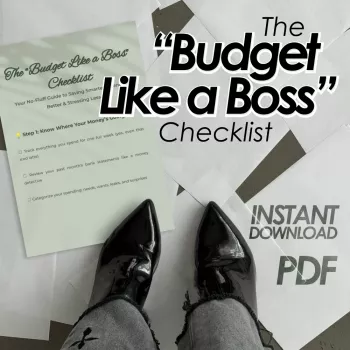
If you want a simple framework while you review your numbers, the Budget & Save Like a Boss checklist planner keeps fixed bills, variable spending, and savings in one place—so you’re not juggling notes across apps.
Set 3 priorities that make the budget work
Many budgets fail because they try to optimize everything at once. Instead, decide what matters most for the next 30 days.
- Cover essentials first: housing, food, transportation, insurance, minimum debt payments.
- Choose one savings goal to lead with (emergency fund, sinking fund, or debt payoff buffer).
- Pick one lifestyle category to protect (coffee, dining out, hobbies) so the plan feels livable.
- Define success for the next 30 days (example: “no overdrafts” or “$200 saved”).
When essentials are tight, protecting one small “life is still good” category can keep the whole plan from collapsing. That’s not indulgence—it’s sustainability.
Use the Boss Checklist method (plan, protect, automate, adjust)
This four-part method is designed for real life: messy weeks, surprise expenses, and limited time.
- Plan: assign every expected dollar a job before the month starts (even if estimates are rough).
- Protect: build a small buffer category for surprises (start with $25–$100).
- Automate: schedule bills and an automatic savings transfer for payday or the next day.
- Adjust: when spending runs high in one area, reduce another category the same week—don’t “wait until next month.”
Simple Monthly Budget Checklist (Beginners + Busy Adults)
| Step | What to do | Time | Frequency |
|---|---|---|---|
| 1 | List take-home income and pay dates | 5 min | Monthly |
| 2 | Pay/plan fixed bills (rent, insurance, subscriptions) | 10 min | Monthly |
| 3 | Set weekly amounts for groceries + transportation | 5 min | Monthly |
| 4 | Create 1–2 sinking funds (car, medical, gifts) | 5 min | Monthly |
| 5 | Schedule auto-transfer to savings (even small) | 3 min | Monthly |
| 6 | Do a 10-minute weekly check-in and re-balance categories | 10 min | Weekly |
Need help deciding what counts as a “fixed” bill versus a variable expense? The Consumer Financial Protection Bureau (CFPB) budgeting resources offer beginner-friendly definitions and tools.
A realistic first savings plan (even on a tight budget)
Saving is easier when the goal is small, specific, and protected by your system. Start by making savings boring and automatic.
- Start with a “mini emergency fund” target (example: $300–$500) before aggressive goals.
- Use the 1% rule: save 1% of take-home pay for two pay cycles, then bump to 2% if stable.
- Try a “no-drama cut”: cancel one low-value subscription or reduce one recurring convenience purchase.
- Add a sinking fund for predictable spikes (holidays, car maintenance) to avoid credit card reliance.
- If debt is present, prioritize minimums plus a small savings buffer to prevent new debt from emergencies.
For many households, the most expensive emergencies are transportation and insurance surprises. If you’re a new car owner (or shopping for coverage), the Smart Insurance for New Car Owners: A Guide to Understanding Insurance Basics & Choosing the Right Policy can help you understand what you’re paying for—and where to be careful—so your “fixed bills” don’t blow up later.
Make it stick with a 10-minute weekly routine
A budget isn’t a one-time setup. It’s a quick rhythm that keeps small problems from becoming expensive problems.
If you want a lightweight structure without spreadsheets, MyMoney.gov is a helpful federal resource for budgeting basics and simple financial checklists.
Common budget blockers and quick fixes
A simple planner to keep everything in one place
- Look for a planner that separates fixed bills, variable spending, and savings goals with quick checkboxes.
- Use it at setup (monthly) and for the weekly 10-minute check-in.
- Product option: Budget & Save Like a Boss | Simple Checklist for Beginners & Busy Adults | Smart Money Planner for How to Budget and Save Money (digital-friendly, quick-start format).
FAQ
How much should be saved each month if money is tight?
Start small and consistent—often 1%–5% of take-home pay—until the budget feels stable. Build a mini emergency fund first, then increase your savings rate after a month of on-time bills and no overdrafts.
What’s the easiest budget method for beginners who hate spreadsheets?
A checklist-based budget works well: set weekly caps for key categories, add a small buffer line, and do a quick weekly check-in. Simple templates or a one-page planner can replace spreadsheets while still keeping spending visible.
How often should a budget be reviewed?
Do a monthly setup for income, fixed bills, and weekly caps, then review weekly for about 10 minutes. Checking upcoming bills and rebalancing categories in real time prevents end-of-month surprises.














Leave a comment