Eco-Friendly Fabric Options: Choose Better, Wear Longer
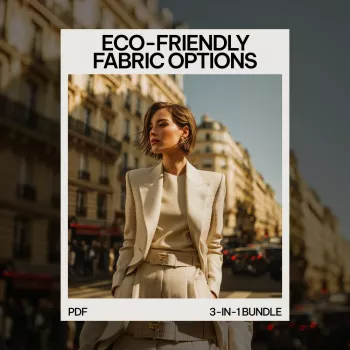
Eco-Friendly Fabric Options Bundle: A Practical 3-in-1 Guide for Lower-Impact Wardrobes
Choosing lower-impact fabrics can feel confusing because labels, blends, and certifications don’t always match real-world durability or care needs. The goal isn’t perfection—it’s buying pieces that feel good, last longer, and fit your climate and routine. Below is a clear, wear-focused map of common eco-fabric options, how to compare them, and which labels actually add useful information.
If you want a ready-to-reference version you can keep while shopping, the Eco-Friendly Fabric Options Bundle: 3-in-1 Guide for Sustainable Fashion Lovers organizes these choices into a streamlined decision framework.
What “eco-friendly fabric” means in practice
In real wardrobes, a fabric’s footprint depends on more than fiber type. Five impact areas tend to make the biggest difference: how the raw material is grown or sourced (land, water, pesticides), what chemistry is used in processing, how much energy is required, what happens to wastewater, and the garment’s end-of-life options.
“Natural” isn’t automatically low-impact. Cotton can be pesticide-heavy when conventional; wool can be excellent for longevity but comes with animal welfare considerations; plant fibers can still be dyed, finished, and transported in ways that add significant impact. A practical decision order helps keep things simple:
- Fiber type first (plant, regenerated cellulose, animal, recycled synthetic).
- Certification/traceability (proof of claims beats vague marketing).
- Durability and care (a long-lived garment often wins over a fragile “better” fiber).
- Blend complexity (harder to recycle when multiple fibers are tightly mixed).
- Repairability (stitching, seams, hardware, and access for mending matter).
A quick map of common sustainable fabric choices
Plant-based staples
Organic cotton, hemp, and linen (flax) are widely worn, breathable options. Their impacts vary by farming region and processing—especially dyeing and finishing—but they’re often easier to care for and live in day-to-day than more delicate alternatives.
Regenerated cellulosics
TENCEL™ Lyocell, modal, viscose/rayon start from wood pulp. They can be lower-impact when forests are responsibly sourced and the manufacturing uses more modern, controlled systems (especially lyocell-style processes). Because the category is mixed, traceability makes a big difference.
Animal-based options
Wool (including recycled), alpaca, and responsibly sourced down can deliver exceptional warmth and lifespan per wear. The key tradeoffs are animal welfare and land management—so standards and supplier transparency matter.
Recycled synthetics
Recycled polyester/nylon can be a smart pick for technical needs (rain shells, performance layers) because it uses waste feedstock. The downside is microfiber shedding and the reality that many blends and coatings are difficult to recycle again.
Emerging materials
Comparison table: benefits, tradeoffs, and best uses
| Fabric | Strengths | Watch-outs | Best for |
|---|---|---|---|
| Organic cotton | Widely available; soft; reduced pesticide use | Can still be water/energy intensive; verify certification | T-shirts, denim, everyday basics |
| Hemp | Durable; often lower inputs; breathable | Can feel coarse unless processed well | Workwear, summer layers, bags |
| Linen (flax) | Breathable; strong; excellent in heat | Wrinkles easily; processing impacts vary | Shirts, dresses, warm-weather tailoring |
| TENCEL™ Lyocell | Soft drape; strong; often made with controlled solvent systems | Confirm traceability; blends reduce recyclability | Blouses, dresses, loungewear |
| Recycled wool | Warm; long life; reduces virgin fiber demand | Pilling/itch can vary by grade and knit | Coats, sweaters, winter accessories |
| Recycled polyester | Performance-friendly; uses waste feedstock | Microfiber shedding; end-of-life is complex | Outerwear, select activewear |
Certifications and labels that actually help
- GOTS is one of the strongest signals for organic fiber content plus processing requirements, especially for cotton and other natural fibers. Reference: Global Organic Textile Standard (GOTS).
- OEKO-TEX® focuses on chemical safety testing, which can be valuable for skin-contact items, though it doesn’t guarantee the lowest overall footprint. Reference: OEKO-TEX® standards and labels.
- FSC/PEFC (wood-based fibers) indicates more responsible forestry; pair it with reputable production methods when possible.
- RWS/RMS/RAS (wool-related standards) can help address animal welfare and land management.
For a broader view of preferred fibers and industry reporting, Textile Exchange is a helpful reference point: Textile Exchange resources.
How to choose fabrics by garment type and lifestyle
High-wear basics (tees, underwear, socks)
Warm-weather pieces
Activewear and rain protection
Cold-weather insulation
Getting more wear: care, repair, and end-of-life
What’s inside the 3-in-1 fabric options bundle
The Eco-Friendly Fabric Options Bundle: 3-in-1 Guide for Sustainable Fashion Lovers is built for real shopping decisions—especially when product pages are vague. It includes a structured reference across common eco-fabric categories, a practical decision framework that balances feel/durability/ethics/care, and label-reading prompts designed to help you spot greenwashing quickly.
For finishing touches that fit a streamlined wardrobe approach, you can also explore simple accessories like Exaggerated Leaf Stud Earrings – Trendy Geometric Design—an easy way to refresh outfits without replacing core garments.
FAQ
Is organic cotton always the most sustainable choice?
No—organic cotton reduces certain agricultural chemicals, but it can still require significant water and energy depending on region and processing. Certification, farming practices, and how long you actually wear the garment matter just as much as the fiber name.
Are bamboo fabrics eco-friendly?
It depends on how the bamboo is turned into fabric: mechanically processed “bamboo linen” is different from bamboo viscose/rayon, which typically uses more chemical-intensive processing. Look for transparent sourcing and, when possible, more controlled production methods similar to lyocell-style systems.
What fabric is best for a sustainable capsule wardrobe?
The best capsule fabrics are the ones you’ll wear constantly: pick a small set based on climate (linen/hemp for heat, wool for cold, organic cotton/lyocell for year-round layering). Prioritize durable weaves/knits, repairable construction, and care habits that keep pieces in rotation longer.













Leave a comment