Beginner Stargazing Tonight: Easy Constellations & Tips
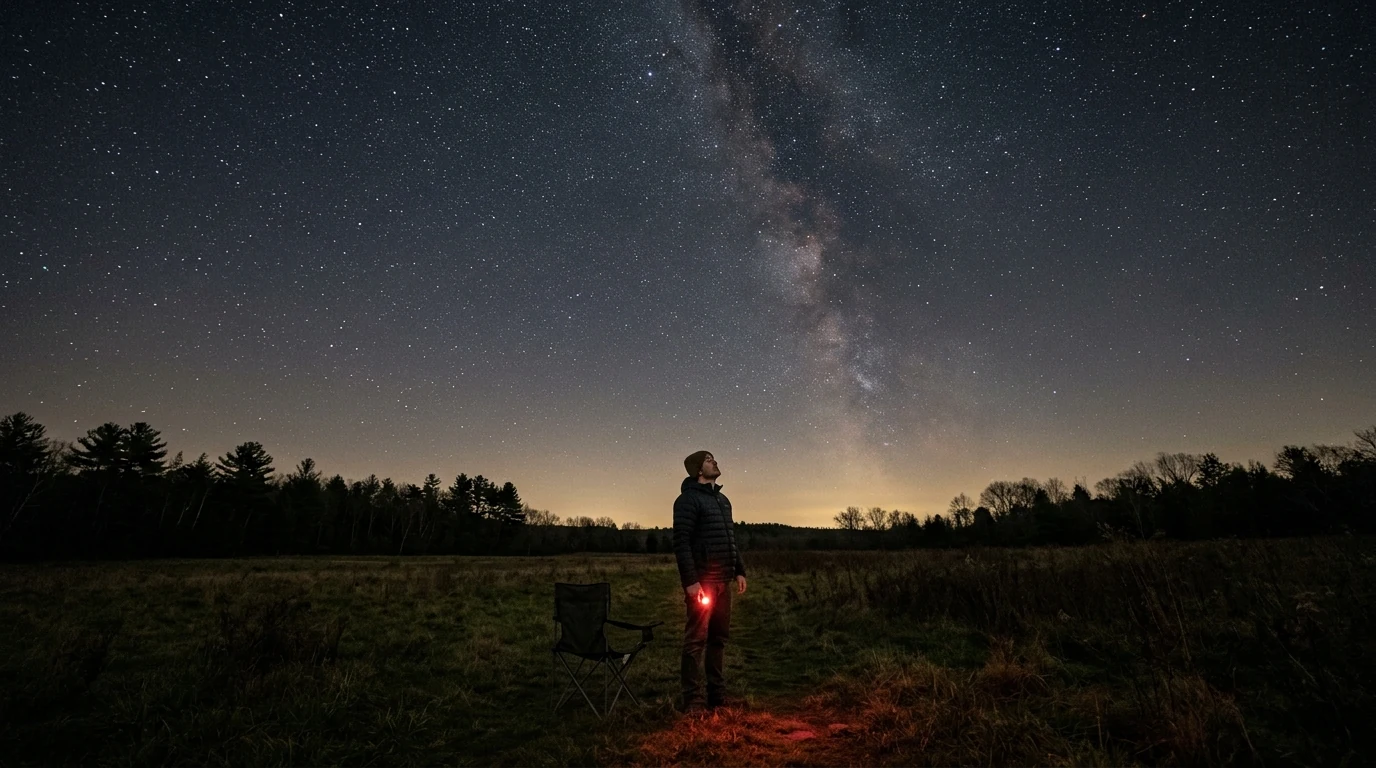
Stargazing Made Simple: A Beginner-Friendly Night Sky Guide You Can Use Tonight
A clear night sky can feel overwhelming at first—so many points of light, so little certainty about where to start. Our team put together this confidence-building path you can use tonight: what to bring, how to choose a spot, which constellations to learn first, and how to catch memorable celestial events without expensive gear. If you want a structured, step-by-step companion you can keep on your phone or tablet, our digital download Stargazing Made Simple – Beginner Stargazing Guide eBook (digital download) is designed to help you turn curiosity into real sky-reading skills. For more guidance, see Need a Break? Try Stargazing with our Devil’s Lake Activity Kit.
Start with the simplest goal: find patterns, not perfection
The fastest way to feel “oriented” is to stop trying to identify everything and instead learn a few reliable patterns that act like street signs. For further reading, see Stargazing 101: A Comprehensive Guide to Astronomy for ….
- Learn a few anchor constellations first. These big, recognizable shapes help you locate other objects later.
- Go naked-eye before adding gear. Early progress comes from repetition and recognizing shapes, not magnification.
- Expect the sky to change. Seasons and latitude shift what you see; the skill is noticing familiar patterns as they move.
- Keep sessions short at the start. Ten to twenty minutes a few nights a week beats a rare two-hour “marathon.”
A beginner’s kit that fits in a pocket
You don’t need a telescope to begin. You need comfort, a dim light option, and a simple way to confirm what you’re seeing.
- Red-light option (or a dimmed phone with a red filter) to preserve night vision.
- A simple star map or sky app for quick orientation—use it briefly, then look up and verify with your eyes.
- Comfort items like a warm layer, a blanket or chair, and a warm drink in colder months.
- A note-taking habit: date, time, location, and what you identified—your progress becomes obvious within weeks.
| Bring | Why it helps | Beginner-friendly tip |
|---|---|---|
| Red light / dim screen | Protects night vision | Avoid bright white screens for 10 minutes before looking up |
| Star map or sky app | Gives you a starting direction | Use it to confirm, not to stare at the screen |
| Warm layer + seat | Keeps you comfortable | Comfort increases time under the sky—and learning follows time |
| Notebook or notes app | Tracks what you’re learning | Write 1–3 objects you identified each session |
Pick the right time and place for a clearer sky
Where and when you observe can matter more than what you observe with.
- Get away from direct glare. Even stepping behind a building, tree line, or fence can boost contrast.
- Check the Moon phase. Darker skies near a new moon reveal more stars, but a bright moon is perfect for learning lunar features.
- Let your eyes adapt. Give yourself 15–20 minutes away from bright light for noticeably better star visibility.
- Look for good transparency. “Clear” isn’t only “no clouds”—haze can hide fainter constellations.
For a deeper explanation of how artificial light affects visibility, the International Dark-Sky Association offers a clear overview here: Light Pollution Basics.
Constellations to learn first (and what they unlock)
Once you can recognize a couple anchors, you can “hop” across the sky using pointer stars—this is the foundation of sky navigation.
| Anchor pattern | How to recognize it | What it helps you find next |
|---|---|---|
| Big Dipper (Ursa Major) | Large ladle shape | Pointer stars guide toward Polaris (North Star) |
| Polaris (North Star) | Steady star near true north | Helps orient the rest of the sky and directions |
| Orion (seasonal standout) | Three-star belt line | Leads toward bright stars and nearby winter objects |
| Cassiopeia | W or M shape | Another reliable way to find Polaris and navigate |
Keep it simple: once an anchor is reliable, add only one new constellation per week. That pace gives you time to repeat, confirm, and remember.
Celestial events that feel magical—even for complete beginners
For upcoming skywatching highlights and timing, NASA’s monthly overview is a reliable starting point: NASA “What’s Up” Skywatching Tips.
Common beginner roadblocks (and simple fixes)
A simple plan for the first week (repeatable, low-stress)
Digital guides that keep your learning simple
- Stargazing Made Simple – Beginner Stargazing Guide eBook (digital download): A beginner-focused guide built for short sessions, constellation basics, and practical tips for catching celestial events.
- Smart Insurance for New Car Owners: A Guide to Understanding Insurance Basics & Choosing the Right Policy: Another easy-to-store digital guide for life basics—helpful when you prefer a straightforward checklist approach to learning something new.
FAQ
Do binoculars or a telescope make sense for a beginner?
Start by learning directions and a few constellations with your naked eye, because that skill makes everything else easier. Binoculars are a great next step for the Moon and brighter star clusters, while a telescope is optional and usually more enjoyable once you can reliably navigate the sky.
What’s the easiest way to find constellations without getting lost?
Pick one anchor constellation, confirm where north is, and then use pointer stars to hop to one new target at a time. Repeating the same short routine over multiple nights is what turns random stars into recognizable patterns.
How can stargazing work in a light-polluted neighborhood?
Block direct glare, focus on brighter targets (the Moon, planets, and bold constellations), and time sessions around the Moon phase to match your goal. When you can, even a short drive to a darker park or open area can dramatically increase what you see.
















Leave a comment