30+ Outfit Ideas Using What You Already Own
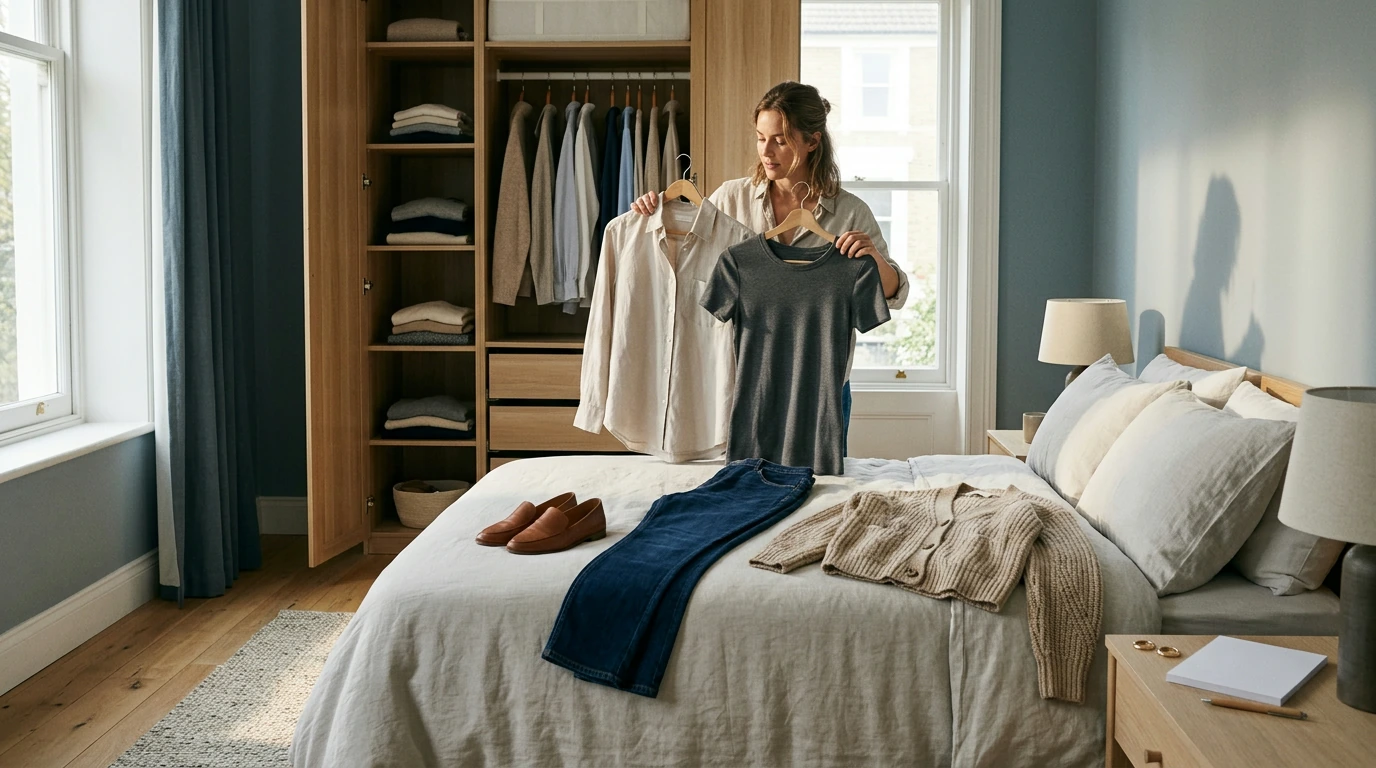
Styling Tricks From Your Existing Wardrobe: Turn “Nothing to Wear” Into 30+ Outfits
A wardrobe refresh doesn’t have to start with a shopping cart. The fastest way to look more pulled-together is learning a few repeatable styling moves that make the clothes already in your closet work harder. Our team built this approach for real-life dressing: simple outfit formulas, mix-and-match checklists, and quick guides that help you create new combinations from what you already own—without the overwhelm.
What this 3-in-1 bundle is designed to solve
Most “nothing to wear” days aren’t about having too few clothes—they’re about having too many options with no system. Here’s what we designed our Styling Tricks from Your Existing Wardrobe: 3-in-1 Bundle of Guides, eBooks, and Checklists to address:
- Decision fatigue: clear outfit formulas for common situations (work, errands, dinner, weekend).
- Closet “blind spots”: spotting the pieces that never get worn and giving them a job in your rotation.
- Mismatch moments: learning small swaps (shoe, sleeve, tuck, layer) that change the whole vibe.
- Over-shopping: building outfits from existing staples before adding anything new.
- Consistency: creating a repeatable method so getting dressed gets easier each week, not harder.
Common wardrobe frustrations and the styling fix
| If this feels familiar… | Try this styling move | Result |
|---|---|---|
| Outfits look “fine” but never feel finished | Add one intentional third piece (layer, jacket, structured overshirt, or statement accessory) | Instantly reads more styled, not just dressed |
| Closet is full but options feel limited | Use an outfit formula and rotate only one variable (top, shoe, or outer layer) | More combinations with fewer decisions |
| Basics look boring | Change proportions (half-tuck, cuff sleeves, belt, front tuck, or swap to a cropped layer) | Same item, updated silhouette |
| Everything feels the same season after season | Shift color placement (light near face, darker on bottom, or a single accent color) | Fresh look without buying new categories |
What’s inside the bundle (and how to use it in 30 minutes)
This is a practical toolkit you can use quickly—then reuse weekly.
- Guides: step-by-step styling moves you can apply to tees, button-downs, knits, denim, skirts, and simple dresses.
- eBooks: outfit-building frameworks that show how to remix pieces across multiple looks with minimal swaps.
- Checklists: quick references for “grab-and-go” days—ideal when time is short and energy is lower.
A simple 30-minute start: pick 5 everyday pieces (favorite jeans, a neutral top, a layering piece, a shoe you actually wear, and one accessory). Run them through the checklists once to build a mini outfit bank you can lean on immediately.
A weekend reset: draft 7 outfits from your closet, then keep the best 3 formulas on repeat with small changes (shoe, jacket, neckline). Repeating a formula is how style gets easier, not harder.
The 5 styling moves that make an existing wardrobe look new
When you’re stuck, don’t start over—choose one move and commit to it.
- Proportion play: pair one relaxed piece with one defined piece (wide-leg + fitted top, oversized shirt + slim bottom, long layer + cropped inner layer).
- Intentional structure: add definition with a belt, a tuck, a front knot, or a jacket that has shape at the shoulder.
- Texture stacking: combine two different textures (denim + knit, cotton + leather-look, smooth + ribbed) to add depth even in neutral outfits.
- Color placement: keep your palette simple (2–3 colors) and place the brightest/clearest color closer to your face for an “awake” look.
- Accessory focus: instead of piling on accessories, choose one focal point (earrings OR bag OR shoe) so the outfit looks intentional, not busy.
A fast finishing shortcut (that works with basics)
If your closet is heavy on tees, knits, denim, and neutrals, one statement accessory can do more than a full outfit change. A pair of face-framing earrings is one of the quickest “done” signals—especially on low-effort outfits like a tee-and-jeans uniform. Our team loves using Exaggerated Leaf Stud Earrings – Trendy Geometric Design as the single focal point: keep everything else simple and let the accessory carry the styling.
Outfit formulas that work with most closets
Formulas keep you from reinventing the wheel every morning. You’re not trying to create a brand-new look daily—you’re building reliable “templates” and rotating small variables.
If you want deeper fundamentals for how designers and stylists think about wardrobe building, you can also explore resources from CFDA and the Fashion Institute of Technology (FIT).
Make it stick: a simple weekly routine that prevents closet boredom
Bonus: when your closet needs physical breathing room
Sometimes “I have nothing to wear” is really “I can’t see what I own.” If you’re rotating seasonal pieces or you’re short on indoor storage, creating an off-season home for overflow can help your everyday wardrobe feel clearer and more usable. For those situations, our store also carries the 6FT x 4FT Outdoor Metal Storage Shed – Durable Steel Utility Tool House with Secure Lock, Brown as an option for keeping bins and seldom-used items out of your daily getting-dressed zone.
FAQ
Is this bundle useful if the wardrobe is mostly basics and neutrals?
Yes. You’ll focus on proportion, structure, texture mixing, and choosing one focal accessory so your basics look intentional instead of plain.
How long does it take to see a difference in daily outfits?
Many shoppers notice a change immediately after building a small outfit bank of 5–7 looks. Once you have a few go-to formulas, getting dressed speeds up fast.
Does it help with creating outfits for different settings like work and weekends?
Yes. You can reuse the same base pieces and change only the layer, shoe, and finishing touch to shift from casual to polished and everything in between.












Leave a comment