A Simple Night Routine for Calm Skin and Better Sleep
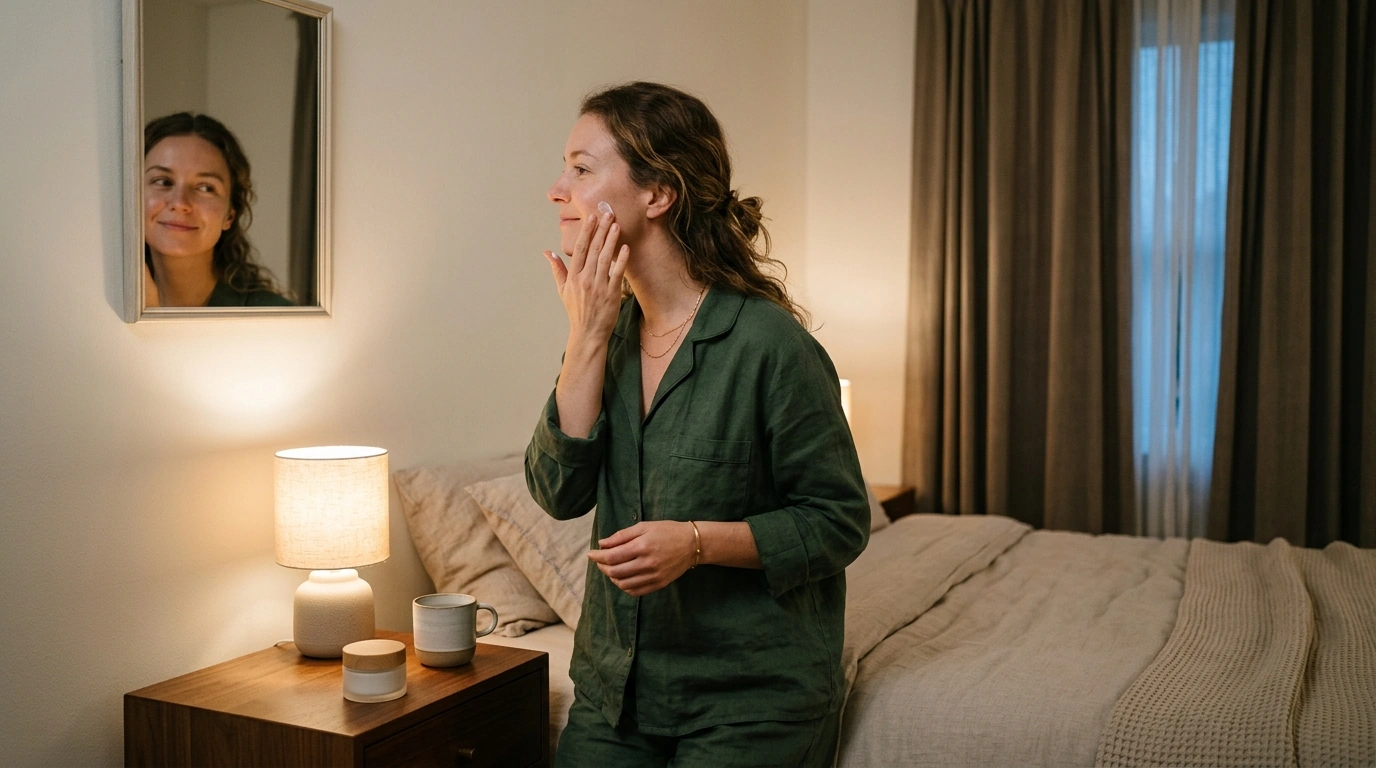
Evening Routines for Restful Skin and Deep Sleep
A calming night routine can support healthier-looking skin and make it easier to fall asleep and stay asleep. The most effective approach combines gentle skincare, a downshift in light and stimulation, and small, repeatable cues that tell the body it’s time to rest—without requiring a complicated multi-step program. When the routine is simple enough to repeat on busy nights, it’s far more likely to become the kind of consistency that pays off in both comfort and appearance.
Why nighttime habits affect skin and sleep
Nighttime is when the day’s choices catch up with you. Sleep loss and late-night stress often show up the next morning as dullness, puffiness, and increased sensitivity. If your skin feels “off” after a rough night, that’s not your imagination—it’s a sign your barrier and hydration rhythms didn’t get the steady recovery time they needed.
A predictable evening routine also reduces decision fatigue. Instead of debating what to do every night (and sometimes doing nothing), you rely on a short sequence you can follow almost automatically. That kind of consistency is often more impactful than adding more products or chasing a perfect schedule.
Nighttime skincare works best when paired with reduced heat, light, and stimulation—conditions that also support deeper sleep. Cooling the room, dimming lights, and avoiding mental “spikes” (like notifications or intense content) makes it easier for your nervous system to shift into rest mode. For sleep-hygiene fundamentals, the CDC’s tips for better sleep and the NHLBI healthy sleep habits are solid references.
The 45-minute wind-down: a simple sequence that’s easy to repeat
If your evenings feel chaotic, aim for a “good enough” timeline that starts about 45 minutes before bed. The point isn’t to fill the time with tasks—it’s to steadily lower stimulation while taking care of your skin in a way that feels comfortable.
- 45–30 minutes before bed: lower lights, silence notifications, and switch to warmer lighting to reduce stimulation.
- 30–20 minutes: cleanse gently (avoid overly hot water); pat skin dry to reduce irritation.
- 20–10 minutes: apply core skincare (one treatment step max + moisturizer) to prevent over-layering and friction.
- 10–0 minutes: breathing, light stretching, or a short body scan; keep the bedroom cool, dark, and quiet.
Sample timeline for a skin + sleep night routine
| Time | Action | Goal | Keep it simple tip |
|---|---|---|---|
| 45 min | Dim lights, put phone on Do Not Disturb | Signal “slow down” | Charge devices outside the bed if possible |
| 30 min | Gentle cleanse + lukewarm rinse | Remove sunscreen/makeup without stripping | Use fingertips; skip harsh scrubbing tools |
| 20 min | Target step (optional) + moisturizer | Support barrier and comfort | If skin is reactive, skip actives and just moisturize |
| 10 min | Breathing or short stretch | Lower tension and racing thoughts | Try a 4-7-8 style rhythm or a slow exhale focus |
| 0 min | Lights out, same bedtime cue | Consistency for deeper sleep | Use a single repeat cue: scent, sound, or a brief note-to-self |
Nighttime skincare that supports a calm, comfortable face
For most people, “restful skin” at night is less about intensity and more about comfort. Prioritize barrier support: cleanser + moisturizer is often enough on low-energy nights, and it’s easier to stick with than a long lineup that can lead to over-cleansing or too much friction.
If you use active ingredients, rotate rather than stack. Combining multiple strong actives in one night can increase dryness, redness, or stinging—sensations that make it harder to relax. If you’re unsure what’s best for your baseline routine, the American Academy of Dermatology’s skin care basics offers practical guidance that aligns well with a gentle night approach.
A sleep ritual that pairs with skincare (without adding time)
AI-assisted personalization: adjust the routine to your night, not an idealized plan
Common obstacles (and quick fixes that keep the habit intact)
A guided plan to make it effortless
If you want a structured, step-by-step approach that blends nighttime skincare with a calming sleep ritual, Nighttime Skincare & Sleep Ritual Guide (Download) is designed around flexible routines—minimum, standard, or reset nights—so you can match the plan to your real evening.
For a few extra feel-good additions that can support a calmer bedtime environment, consider setting up tomorrow’s essentials earlier in the evening (so nights stay quiet) and keeping small self-care items within reach. If you’re also organizing your space to reduce late-night “cleanup stress,” an outdoor storage solution can help keep clutter out of the way, such as the 6FT x 4FT Outdoor Metal Storage Shed – Durable Steel Utility Tool House with Secure Lock, Brown. And if you like a simple “end-of-day reset” cue, choosing a pair of earrings you take off at the same time nightly can become a small habit anchor—see Exaggerated Leaf Stud Earrings – Trendy Geometric Design.
FAQ
How long should an evening routine take to support better sleep and healthier-looking skin?
Most nights, 10–20 minutes is plenty if the steps are consistent. Keep a 5-minute minimum routine for exhausted evenings, and use a longer “reset” routine only when you truly need it.
Should active skincare ingredients be used every night?
Not always—rotating actives and avoiding stacking multiple strong products often reduces dryness and redness. If sensitivity affects comfort at bedtime, prioritize barrier support and reintroduce actives gradually.
What if late-night screen time is the hardest habit to change?
Start with a timed wind-down: dim lights, shift to warmer lighting, and turn notifications off 30–45 minutes before bed. Charging your phone outside the bed and swapping to a low-stimulation cue (breathing, stretching, or a few pages of reading) makes the transition easier.
















Leave a comment